
What Is an ADU? A Guide for Orange County Homeowners
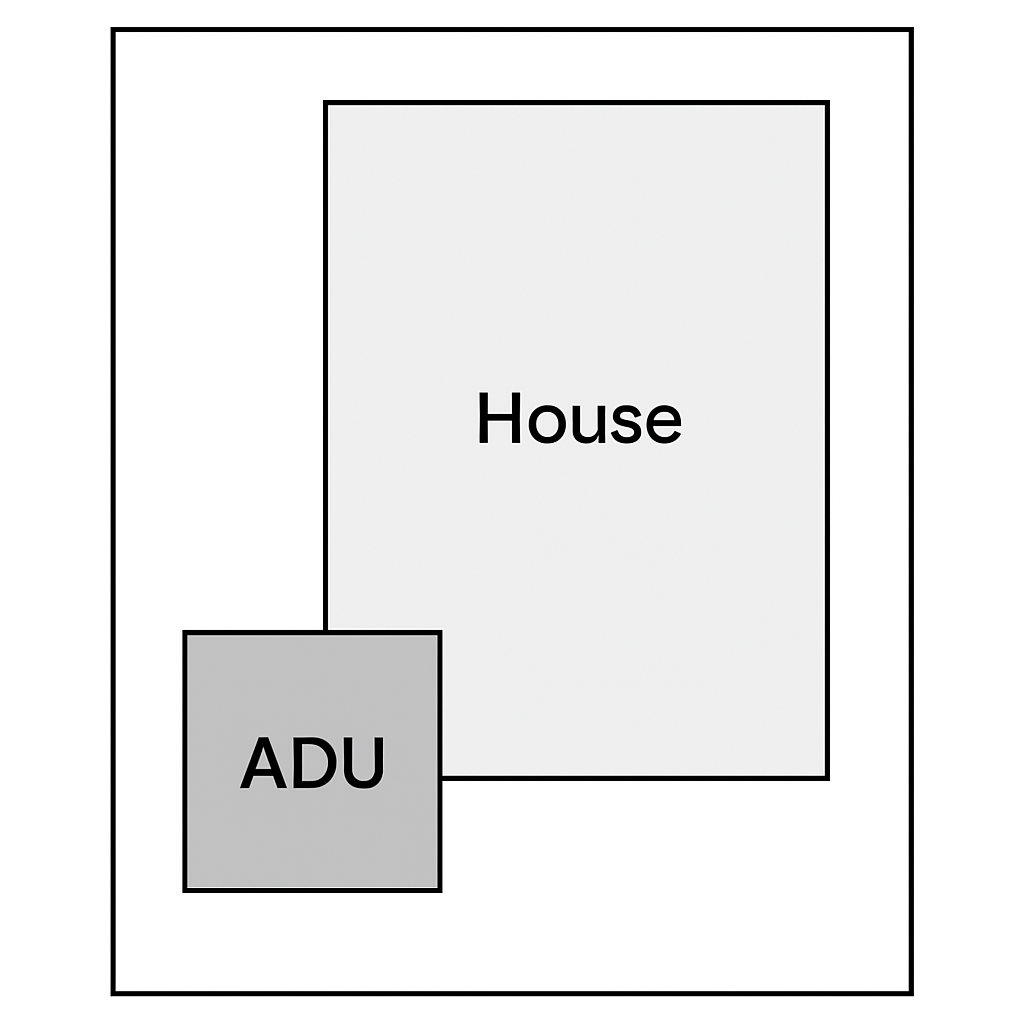
An accessory dwelling unit (ADU) is a secondary, self-contained living space on the same lot as a single-family home. For many California homeowners, an ADU is a way to create room for family, add flexibility for the future or open up rental potential — without moving. Here is what Orange County homeowners should know before starting.
Types of ADUs
Detached ADU
A separate structure, usually in the backyard or side yard.
Attached ADU
Connected to the main home, with its own entrance and living space.
Garage conversion
An existing garage converted into a living unit.
Existing-space conversion
Qualifying interior space converted into a separate unit.
Why Homeowners Consider an ADU
Family living
A place for parents, adult children or relatives to live close by while keeping privacy.
Flexibility
A guest house, home office or space that can change use over time.
Rental potential
An ADU may create an opportunity for rental income, depending on your property and local rules.
Using the property you already own
Adding living space without buying a larger home.
California has passed a series of laws in recent years to make ADUs easier to permit, but the rules that apply still depend on your specific property and city.
Six Questions to Answer Before You Design
1. Lot and access
Is there enough usable space, and how will people reach the unit?
2. Existing structures
Where the main house, garage and other buildings sit on the lot affects what remains buildable.
3. Utilities
The location and capacity of electrical, water, sewer and gas service can influence both design and construction cost.
4. Fire access
Emergency access requirements can affect where an ADU can be placed.
5. Planning rules
Placement, size, height and other requirements vary by property and jurisdiction.
6. Intended use
Family, guests, work or rental — the intended use shapes the layout, privacy and accessibility.
What Affects ADU Cost and Timeline
Every ADU is different. Cost depends on the ADU type, size, site conditions, utilities, design, engineering, permits and finishes. Timing depends on design decisions, permit review, materials, inspections and existing conditions. A reliable price and schedule require a site review and a defined scope — be cautious of any estimate given before anyone has looked at your property.
A Typical ADU Project Sequence
Goals → Feasibility → Plans → Permit → Prebuild → Build → Closeout. Confirming feasibility first helps you avoid committing to a design, price or schedule that the property cannot support.
How RealHomes Helps
RealHomes Construction is a California-licensed B – General Building Contractor (CSLB #1149773) serving Orange County homeowners. We start every ADU with a site review, coordinate qualified design and engineering professionals and the permit process when included in the written scope, and keep one clear point of contact from planning to closeout. Learn more about our ADU and garage conversion services or our process.
Talk to RealHomes
Wondering whether an ADU is right for your property in Garden Grove, Westminster, Fountain Valley, Santa Ana or elsewhere in Orange County? Share your project details or call (714) 657-9092.

